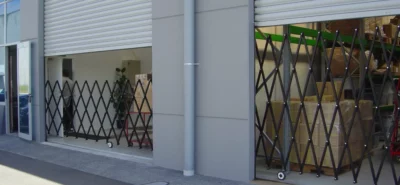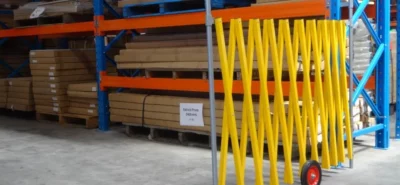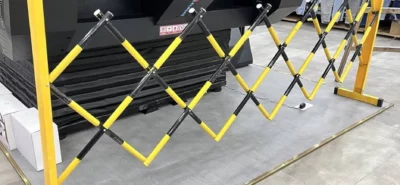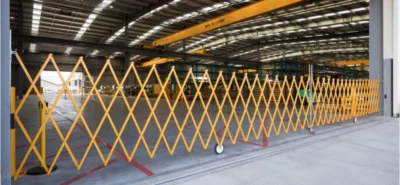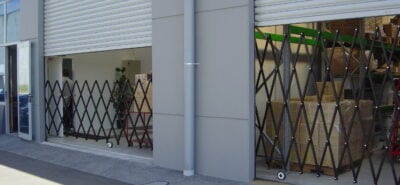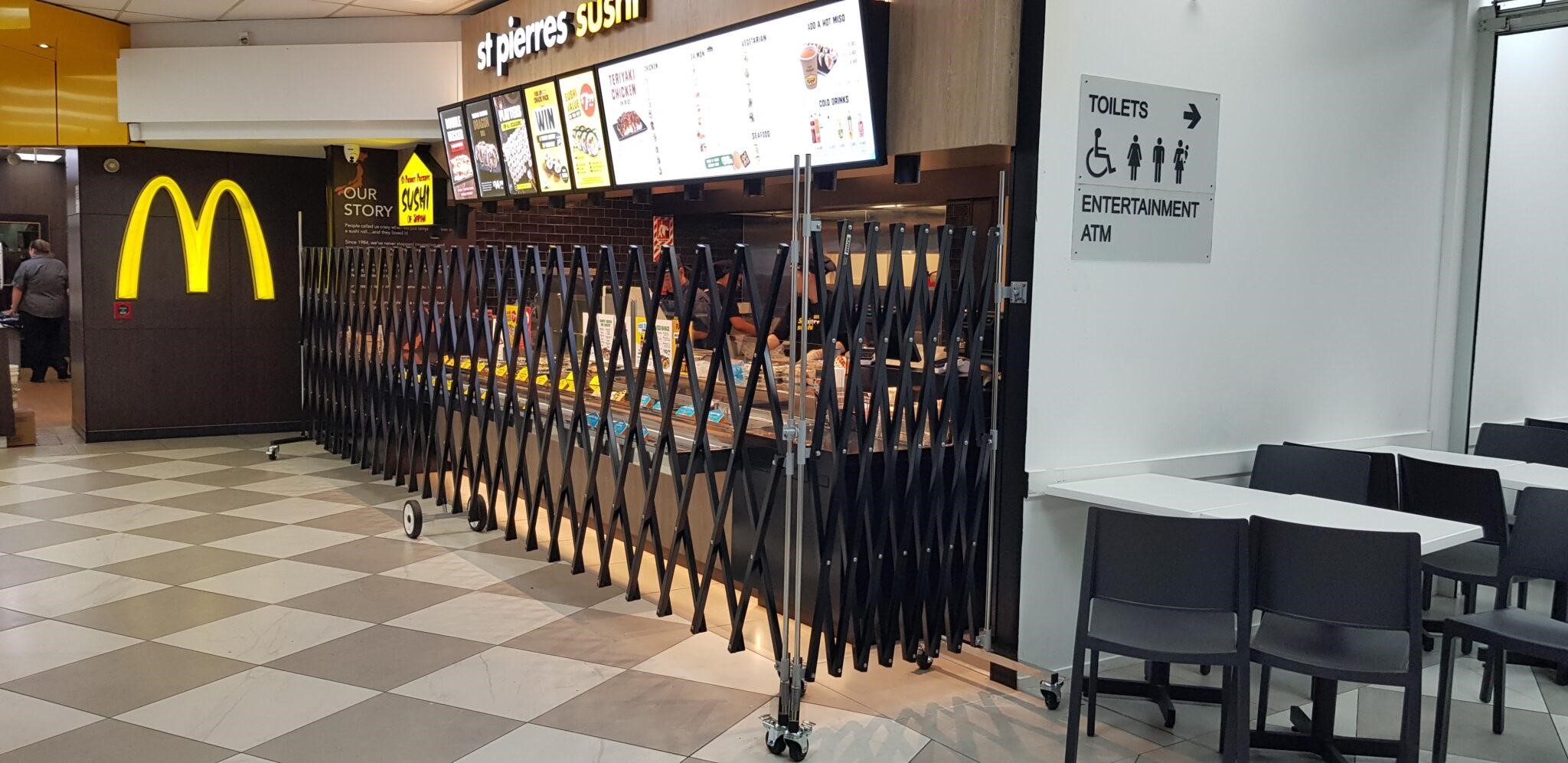
Safety barriers are essential across various fields for maintaining security, traffic management control, and property and individuals. They are meant to lower hazards and offer consistent solutions for efficiency and security in both public and private environments. With an eye on portable and fixed obstacles, This article will explore the types of road safety barriers and other safety barriers, stressing their relevance and uses.
What Are Safety Barriers?
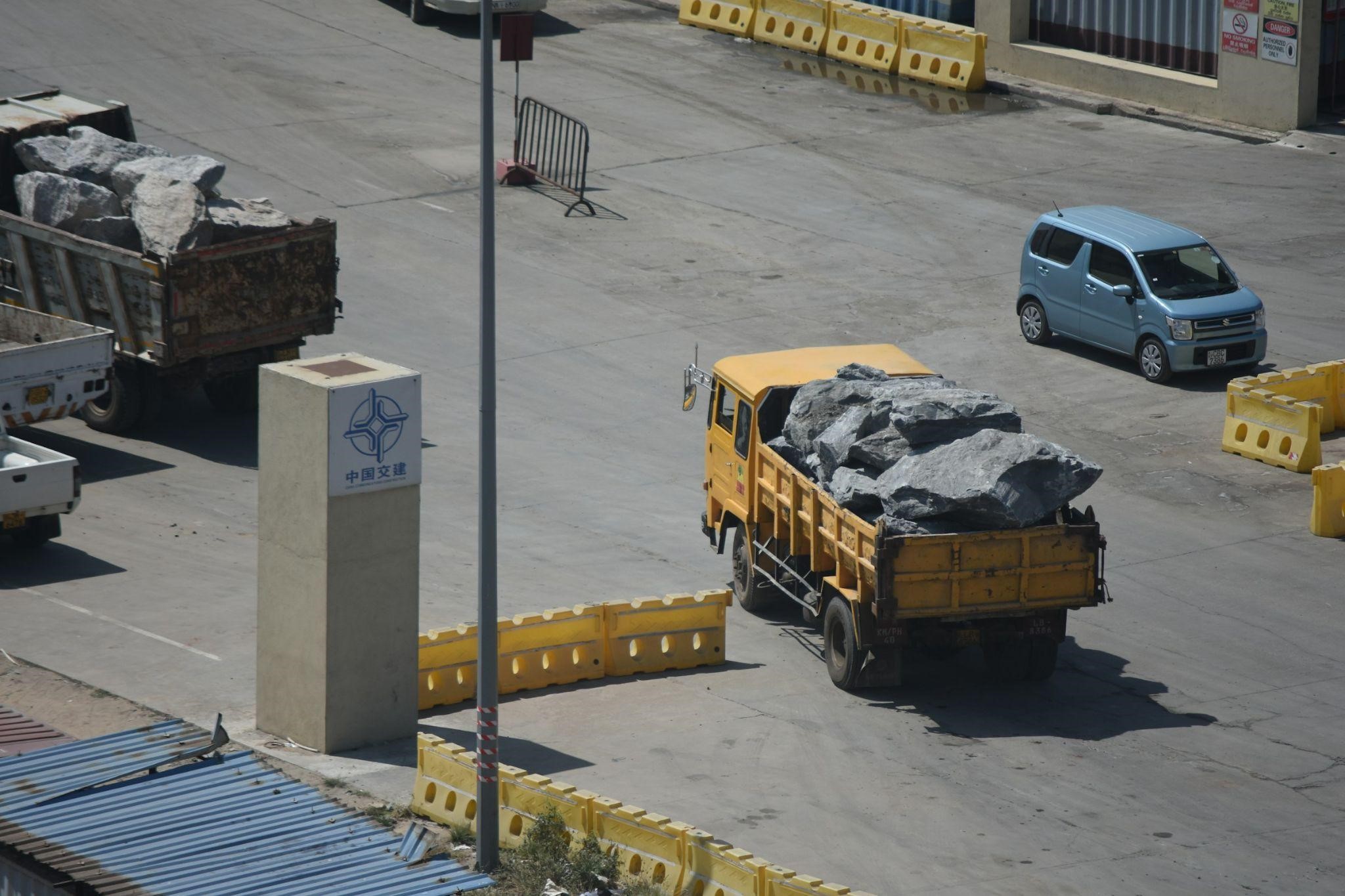
Safety barriers are constructions meant to restrict mobility, stop mishaps, and safeguard property. They are commonly used in areas such as highways, construction sites, warehouses, and industrial facilities. Barriers can be temporary, permanent, lightweight, or robust to meet certain needs.
Portable Barriers
These are flexible, lightweight barriers meant for temporary use. Their simplicity of movement and construction makes them ideal for situations needing quick deployment and removal.
Use for portable barriers:
- Street Safety: During roadworks or traffic diversions, portable barriers guide vehicles and shield workers and drivers.
- Portable barriers help to control crowds and define limited areas at public events.
- Temporary Obstacles: Applied on building sites, they guard workers from possible hazards and forbid illegal entry to dangerous areas.
- Retail and commercial spaces are sometimes utilised in shopping centres and stores to divide sections undergoing repair or maintenance.
- Portable barriers can quickly separate hazardous areas like chemical spills or accident scenes.
Advantages Of Portable Barriers
- Simple for moving and installing
- Reasonably priced for transient usage
- Flexible enough to suit several environments.
- Sturdy and reusable in many contexts.
Fixed Barriers

Fixed barriers are permanently installed and meant for long-term use. Their robust protection and ability to withstand strong impact define them. Usually, these challenges arise in places where security and safety are of great importance.
Applications concerning Fixed Barriers:
- Street Safety: Separating lanes, stopping vehicle crossovers, and safeguarding pedestrians depend on fixed obstacles—concrete barriers and guardrails, among others.
- These barriers guard industrial facilities—including machinery, storage areas, and staff—against vehicle crashes and equipment breakdowns.
- Perimeter Security: Fixed barriers are often used at important locations such as military sites, government facilities, and airports to stop unwanted access.
- Fixed barriers in parks, stadiums, and other congested areas help to keep safety and order.
Advantages of Fixed Barriers:
- incredibly robust and impact-resistant.
- dependable, long-term safety alternatives.
- Low upkeep is needed.
- good in control of busy places.
The Uses of Barriers Across Various Sectors
On construction sites, safety barriers are vital since they guard public safety, workers, and equipment. Whereas fixed barriers offer long-term protection in high-risk areas, portable barriers are extensively used to mark hazardous zones.
Logistics and Transportation
Transportation hubs including ports, train terminals and airports use barriers to control vehicle traffic and guarantee passenger safety. Fixed barriers protect loading zones; portable barriers provide flexible options for temporary traffic flow modification.
Manufacturing and Warehouse Facilities
In manufacturing facilities and warehouses, obstacles help to separate pedestrian walkways from vehicle areas, therefore safeguarding goods and staff. Portable barriers are flexible to reconfigurable areas; fixed barriers offer permanent solutions for heavy machinery areas.
Events and entertainment
Portable safety barriers let event planners establish restricted areas, guard VIP sections, and regulate crowds. Dynamic event environments would find them perfect because of their small weight and freedom of mobility.
Retail and Commercial Areas
In retail environments, barriers ensure limited areas are secured during maintenance or crises and serve to control customer movement. Often used because of their ease and aesthetic adaptability, they are portable barriers.
Why Choose Safety Barriers
1. Purpose
Choose the appropriate barrier type depending on the main goal—traffic management, crowd control, asset protection, or another.
2. Durability
Choose products depending on the required degree of impact resistance. High-traffic areas call for fixed barriers made of concrete or metal; lightweight plastic is suitable for temporary use.
3. Mobility
For uses requiring regular repositioning, portable barriers are excellent; fixed barriers are more suited for permanent safety solutions.
4. Visibility
Traffic safety and emergency conditions depend critically on highly visible barriers including reflective or vibrantly coloured options.
Our Knowledge Regarding Safety Obstacles
At XPANDO®, we offer a complete range of safety barriers catered for different uses. We offer premium solutions that meet industry requirements whether your needs call for fixed barriers for long-term protection or portable barriers for temporary use.
Working closely with customers, our team assesses their needs and suggests the best options for the greatest efficiency and safety. With a focus on durability, adaptability, and innovation, our safety barriers deliver consistent performance in many different fields.
So, In Conclusion
Safety barriers are an important tool for guaranteeing security, traffic control, and personal and property protection. In sectors including construction, transportation, and events, these solutions—which span moveable barriers for flexibility to fixed barriers for long-term safety—are essential.
Understanding the different types of road safety barriers and their use allows companies to implement efficient risk-reducing and safety precautions. At XPANDO®, we are committed to delivering peace of mind by offering premium safety barrier solutions tailored to your specific needs.